BMO Pass · Practical guide
Loyalty cards for small businesses: from first stamp to first reward
A loyalty card gives customers progress towards a reward when they make qualifying purchases or visits. For a small business, the useful starting point is a clear earning rule, a reward you can fulfil and a routine your team can follow at the counter.
This guide takes you through a stamp-card launch for a café, salon or local shop. You can use the planning steps with paper cards or digital loyalty cards. The BMO Pass examples describe our own service; the reward examples are illustrations you can adapt.
1. Choose what earns a stamp
A stamp card records equal steps towards a reward. Decide whether each step means an eligible item, a transaction or a completed visit. Those rules produce different outcomes: someone buying three coffees could earn three stamps under an item rule and one under a visit rule.
Write one sentence your team can say without explaining a points conversion. For example: “Buy eight qualifying hot drinks and receive one regular hot drink.” Specify which sizes count and how extras are treated. This is an example offer, not a recommended threshold for every café.
- Cafés: count eligible drinks if you want progress to follow individual purchases.
- Salons and barbers: count completed qualifying appointments, with a clearly named reward or discount.
- Shops: use a qualifying-purchase rule if baskets are similar. If spending varies widely, a points loyalty card may fit better.
A prepaid package is different: the customer has already bought their sessions. Use a class pass to track those, rather than presenting paid-for visits as a reward to be earned.
2. Work out what the reward costs you
Choose something customers value that your business can consistently supply. Compare the reward’s selling price with the actual cost of fulfilling it. They answer different questions: the selling price describes the offer to the customer, while fulfilment cost helps you plan the programme.
A worked coffee-card example
Suppose eight paid drinks sell for £3.50 each and unlock one free drink. That is £28 in qualifying sales. If the ingredients and cup for the reward cost £0.90, that part of the reward cost is £0.90 ÷ £28, or about 3.2% of qualifying sales.
These are invented numbers for illustration. The calculation excludes labour, overheads, tax, software and any paid sale the reward replaces. It is not a profit calculation or a forecast of extra revenue.
For a salon, also consider appointment time and availability. A complimentary add-on can use a different amount of staff time from a full service. Work through the busiest day, not just a quiet afternoon. If the reward would be difficult to honour, change it before customers start collecting.
Set the threshold around the normal purchase cycle. Eight visits mean something very different at a daily coffee stop and a salon visited every six weeks. Ask whether a regular customer can realistically reach the reward while it still feels relevant.
3. Compare paper and digital loyalty cards
Paper and digital cards can use the same earning rule. The difference is where customers keep their progress and how staff record it. Compare the whole routine, including a lost card and a reward redemption.
Scroll the table sideways to compare both options.
| Question | Paper stamp card | BMO Pass digital stamp card |
|---|---|---|
| Where is the card? | A printed card carried by the customer. | A supported card saved in Apple Wallet or Google Wallet. |
| How does staff add progress? | Mark the physical card after a qualifying purchase. | Scan or find the customer’s card in the staff portal and record eligible activity. |
| What if it is lost? | You need a policy and a way to check previous progress. | The staff portal supports finding customer records and recovering a card link. |
| What do you budget for? | Printing, replacement cards, a stamp and staff time. | The subscription, reward fulfilment and staff time. Confirm suitable devices and connectivity. |
With BMO Pass, customers join from a link or QR code and save a supported wallet card. They do not need a separate BMO customer app. Wallet availability depends on the device and card; Apple’s pass setup guide and Google’s guide to adding a pass explain the platform steps.
If you switch from paper, decide how you will recognise existing stamps. Set a transition process your team can check, and explain it before withdrawing the old cards. A digital launch should not leave a regular customer unsure whether their previous visits still count.
4. Make the stamp card easy to understand
A useful loyalty-card design answers four questions: whose card is this, what earns progress, how much progress is recorded, and what is the reward? Start there before adding extra promotions. Keep your business name recognisable and the reward readable on a small phone screen.
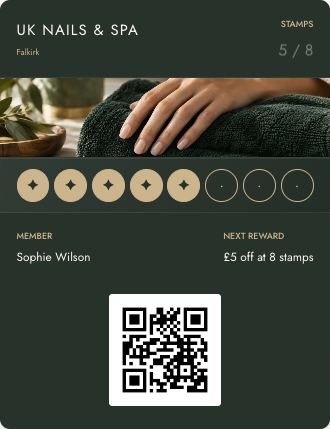
Put detailed qualifying rules alongside the joining information. Explain exclusions, whether a reward purchase earns another stamp, and any expiry conditions. Your team should use the same wording on the counter sign, joining page and customer explanation.
A QR code is a route to a destination, not a reward rule. The joining QR helps a new customer open your programme; the customer’s card code lets staff identify their card. Test each in its intended setting so the counter team knows which one to show and which one to scan.
5. Practise the full counter routine
Before putting up a poster, ask one colleague to act as a new customer and another to serve them. Run through joining, finding the saved card, recording a qualifying purchase and redeeming the reward. Try it on the phones and staff devices you will actually use.
- Check the purchase or visit qualifies.
- Ask the customer to show their card, or help them join if they want to.
- Scan or find the correct card and record the agreed progress.
- Check whether a reward is available, then follow the redemption process.
- Explain where the customer can find the card for their next visit.
Also practise an incorrect stamp, a forgotten phone and a lost joining link. Decide who handles corrections and how staff escalate a problem. BMO Pass is not automatically connected to every till: confirm any required integration instead of assuming payments will award stamps.
6. Introduce the programme where customers already buy
Place the joining information where a customer can comfortably read and scan it. A short invitation at checkout can explain the benefit more clearly than a poster crowded with features. Keep a readable website address beside a printed QR code.
Adapt this counter invitation
“We’ve introduced a loyalty card. Each qualifying visit earns a stamp, and a full card earns [your reward]. You can join using this QR code and keep the card in your phone’s wallet.”
Replace the reward and qualifying rule with your actual offer. Explain those details before asking someone to join. For existing customers, add a short announcement on the business channels you already use and a link to the joining page. Make it easy to find again after launch day.
7. Measure use, returns and reward cost
Choose a review date that gives customers time to make another normal visit. Keep a simple record of sign-ups, people who make a later qualifying visit, completed rewards and fulfilment costs. Use the same definitions each time you compare periods.
If 30 of 100 members return during your chosen window, that is a 30% return rate for that group. It does not mean the programme increased returns by 30%. Regular customers may have returned anyway; seasonality, opening hours and other offers can also affect the result.
Ask staff what slows them down and customers what they find unclear. Low joining could point to a hidden QR code or an unclear invitation. Few completed cards might mean the target is too distant, but first check the programme has run long enough for your normal visit cycle.
Common questions about loyalty stamp cards
How many stamps should a loyalty card have?
There is no single right number. Start with visit frequency, the cost of the reward and how long a regular customer would take to earn it. A familiar ten-box design is not a reason to choose ten if that target does not suit your business.
Does a digital loyalty card collect stamps automatically?
Not necessarily. In the BMO Pass staff workflow, your team records qualifying activity through the portal. Confirm any payment or booking connection during setup before telling customers that purchases automatically add stamps.
Can customers keep a loyalty card in Apple or Google Wallet?
Yes, supported BMO Pass cards can be saved in Apple Wallet or Google Wallet after joining. That is a loyalty pass, not a payment card. A saved card does not mean every wallet feature or notification is available on every device.
Which BMO Pass plan includes stamp cards?
Essentials includes stamp and points cards with ready-made designs and the B-MO staff portal. Pro and Enterprise add bespoke card design and your own staff-app branding. See the current plans, prices and feature availability before choosing.
Set up your first digital stamp card
Use the worksheet to settle your qualifying rule, reward and staff routine. Then explore BMO Pass digital stamp cards or compare stamps with points and other programmes. Bring your draft offer to us so we can confirm the setup your business needs.
Explore the next step
Compare BMO Pass plans and pricing, or ask us about your programme. You can also review our company and service information.